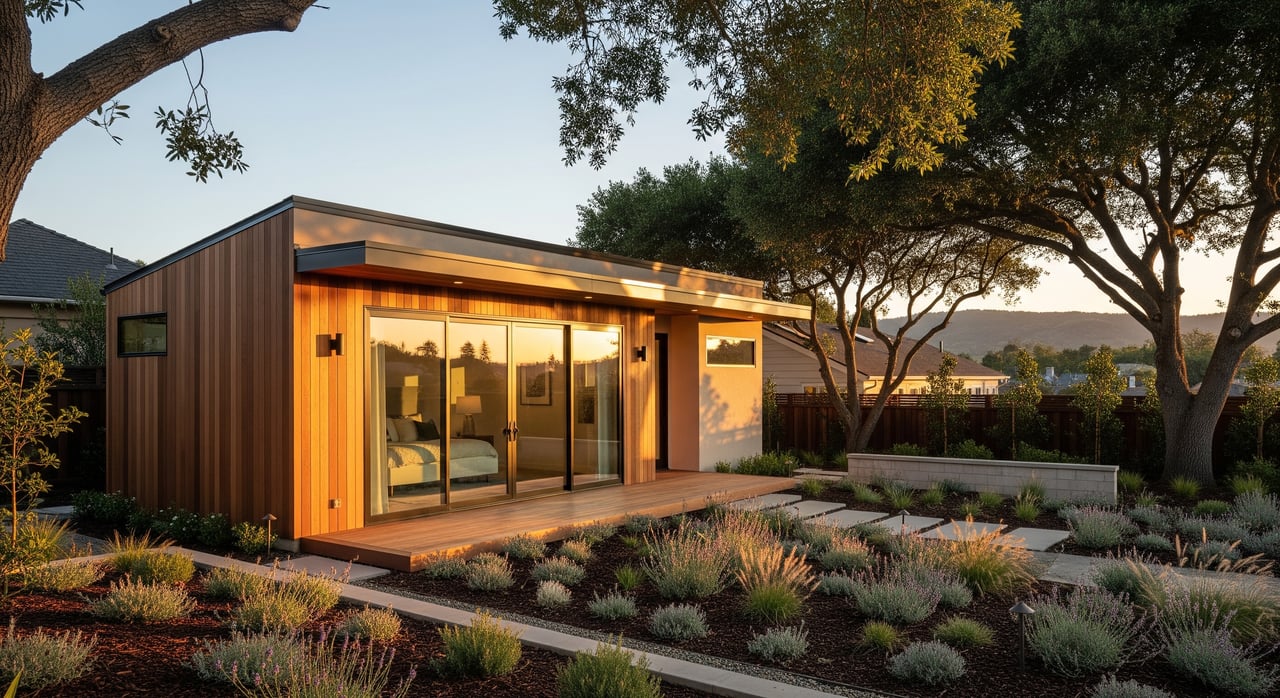
Thinking about adding a backyard cottage, garage conversion, or studio to your Cupertino home? You are not alone. Many homeowners want flexible space for family or steady rental income, but the rules can feel complex. This guide breaks down what California guarantees, what Cupertino looks for, and how to move from idea to approved plans with confidence. Let’s dive in.
ADU basics in Cupertino
An accessory dwelling unit is a secondary home on the same lot as a primary residence. It can be detached, attached, or created by converting existing space. A junior ADU, or JADU, is a smaller unit created within the walls of the main home, often with a kitchenette and shared bathroom access.
You can use an ADU for long-term housing, multigenerational living, or as a rental unit if allowed by local rules. The best path starts with understanding state protections and Cupertino’s specific standards before you design.
What California law guarantees
California has strong statewide rules that support ADU construction and limit local barriers. The California Department of Housing and Community Development provides clear guidance on these protections. You can review state resources on the California HCD website.
Here are the key state-level principles:
- Ministerial approval. If your ADU meets objective standards, cities must use a streamlined, ministerial review process. Discretionary hearings should not be required.
- Size ceilings. State law sets ceilings that cap how restrictive cities can be. Common state guidance cites up to 1,200 square feet for detached ADUs and up to 500 square feet for JADUs. Always confirm Cupertino’s current numeric limits before planning.
- Setbacks. State rules often allow reduced side and rear setbacks for detached ADUs, frequently cited as about 4 feet, and allow many attached conversions to stay within an existing footprint. Verify parcel-specific setbacks with the city.
- Parking exemptions. State law provides multiple exemptions from new parking requirements. For example, no new parking is required in certain cases such as proximity to transit or when converting an existing garage. Check your parcel’s exact status with the city.
- Owner-occupancy. State statutes have limited local owner-occupancy mandates for many newly approved ADUs. JADUs are treated differently and often require owner occupancy of either the main home or the JADU. Confirm the current rules that apply to your project.
If you want to read the statutes, search Government Code sections related to ADUs on the California Legislative Information site.
How Cupertino implements the rules
Cupertino follows state law and may add local standards that are equal to or more permissive than state minimums. Because local numbers and processes can change, verify your property’s details directly through the City of Cupertino’s Planning and Building pages on the City of Cupertino website.
Here is what to confirm with the city before you design:
- Zoning and lot status. Identify whether your property is zoned single-family or multifamily and whether any overlays apply.
- Unit size limits. Ask for the current maximum floor area allowed for detached, attached, and conversion ADUs, and the size cap for JADUs.
- Setbacks and height. Confirm side and rear setbacks, height limits, and whether second stories are allowed for your lot.
- Lot coverage and FAR. Learn whether ADU floor area counts toward lot coverage or floor-area ratio and whether any exemptions apply.
- Parking and exemptions. Verify whether your parcel qualifies for state parking exemptions and if any on-site spaces are required.
- Owner-occupancy and rental rules. Ask about current owner-occupancy requirements for ADUs and JADUs and whether short-term rentals are restricted.
- Utilities and fire. Confirm utility capacity checks, separate meter policies, fire separation requirements, and any local fire authority review.
- Design review and compatibility. Determine whether objective design standards apply and confirm your project will be processed ministerially if standards are met.
- Fees and impact charges. Request a current fee schedule, including plan-check fees, connection fees, and any applicable impact fees.
- Inspections and code. Plan for building code compliance and standard inspections from foundation through final sign-off.
Tip: Early conversations with Planning and Building save time and money. Start with a short call to the city, then tailor your design to fit objective standards.
Step-by-step permit path in Cupertino
Use this practical checklist as you plan your project:
- Pre-application check-in
- Contact the Cupertino Planning Division to confirm zoning, allowed ADU types, and parcel-specific constraints. Ask for the city’s latest ADU handout or checklist.
- Site analysis and feasibility
- Decide on detached, attached, or conversion. Map setbacks, utility routes, tree protection zones, and any easements.
- Design and plan preparation
- Prepare a complete plan set: site plan, floor plans, elevations, sections, and utility diagrams. Conversions should include existing and proposed plans.
- Planning review
- Submit plans for ministerial review if your design meets objective standards. Adjust quickly if the city requests corrections.
- Building permit application
- File with the Building Division. Include structural calculations if needed, title-24/energy compliance, and pay plan-check fees.
- Utility coordination
- Confirm water, sewer, gas, and electrical requirements. Obtain approvals for any new meters or upgrades and pay connection fees.
- Construction and inspections
- Schedule required inspections at each phase. Keep your approved plans on site for inspectors.
- Final approval and occupancy
- Complete final inspection, address corrections, and obtain your certificate of occupancy or final sign-off.
Common causes of delay include incomplete submittals, unresolved parking or utility questions, and missing tree or easement documentation. Ask the city about typical plan-check timelines and how many cycles to expect.
Use cases: family living and rental income
Multigenerational living. An ADU can create privacy and proximity for aging parents, adult children, or a caregiver. For comfort and safety, consider a single-level layout, a no-step entry, wider doorways, and an accessible bathroom. Ensure clear egress and proper lighting.
Rental income. In Silicon Valley, ADUs often attract strong long-term demand, though rents can fluctuate with the market. Evaluate likely rent against construction and operating costs, including utilities, maintenance, and financing.
Regulatory notes. Short-term rentals may be restricted locally, and homeowner associations can impose additional limits. Where HOA rules and local law conflict, enforceability can be complex. Speak with an attorney if needed. Rental income is taxable; consult a CPA about depreciation, expense tracking, and local tax rules. Adding an ADU can affect insurance and property assessment; contact your insurer and the Santa Clara County Assessor for guidance.
Smart design and budget tips
- Start with conversion options. Converting existing space like a garage or basement can reduce cost and speed up approvals compared to new construction. Confirm that your conversion meets code and parking rules.
- Plan utilities early. Ask the city and your utility providers about capacity, meter requirements, and trench routes before finalizing the layout.
- Right-size the unit. Build to the size that meets your needs while staying within Cupertino’s current limits. Bigger is not always better if it adds cost or triggers more complex utility upgrades.
- Mind height and privacy. Place windows thoughtfully and consider screening or landscape buffers to fit the neighborhood context.
- Set a realistic timeline. Budget time for plan-check corrections and inspections, and lock in contractor schedules early.
Avoid common pitfalls
- Skipping the Planning counter. A short call to Planning at the start can prevent months of redesign.
- Assuming parking is required. Your parcel might qualify for a state parking exemption, especially near transit or with a garage conversion.
- Overlooking easements or trees. Identify these early to avoid redesigns and delays.
- Underestimating utilities. Meter, panel, and sewer capacity can drive cost and scheduling. Confirm requirements before you bid the job.
- Ignoring rental rules. Check city short-term rental rules and HOA restrictions before counting on Airbnb-style income.
Local resources worth bookmarking
- City process, contacts, and forms. Start on the City of Cupertino website to find Planning and Building resources, hours, and contact info.
- State guidance and FAQs. Review ADU background and homeowner guides on the California HCD website.
- Statutes and recent updates. Search ADU sections in state law on the California Legislative Information site.
Ready to explore your options?
An ADU can add flexibility for family and potential value to your property when done right. If you are weighing how an ADU might impact resale, buyer demand, or timing for a future move, we can help you think it through. For clear, local guidance tailored to your goals, connect with Jane Dew Real Estate.
FAQs
Do I need a minimum lot size to build an ADU in Cupertino?
- Confirm with the City of Cupertino Planning Division; state law discourages strict minimums, but parcel zoning, lot coverage, and objective standards still apply.
How big can my ADU be in Cupertino?
- State guidance commonly allows up to 1,200 square feet for detached ADUs and up to 500 square feet for JADUs, but you should verify Cupertino’s current numeric limits before designing.
How close can my ADU be to the property lines?
- State law often allows reduced side and rear setbacks for detached ADUs, frequently cited around 4 feet, but confirm Cupertino’s current setback standards for your parcel.
Will I have to add new parking for an ADU?
- Many ADUs qualify for state parking exemptions, such as units near transit or conversions of existing garages; ask Cupertino Planning whether your property meets an exemption.
Can I rent my ADU short-term or only long-term in Cupertino?
- Check Cupertino’s short-term rental rules and any owner-occupancy requirements; also review your HOA’s CC&Rs if applicable, since association rules may be more restrictive.
How long do permits take and what will they cost?
- Timelines and fees vary; request the latest plan-check timelines and fee schedule from Cupertino’s Planning and Building Divisions and plan for possible correction cycles.
Will an ADU change my property taxes in Santa Clara County?
- An ADU can affect your assessed value; contact the Santa Clara County Assessor and a tax professional to understand potential impacts and reporting requirements.
Who do I contact at the City of Cupertino to get started?
- Begin with the Planning and Building Divisions via the City of Cupertino website for zoning confirmation, submittal checklists, and counter hours.