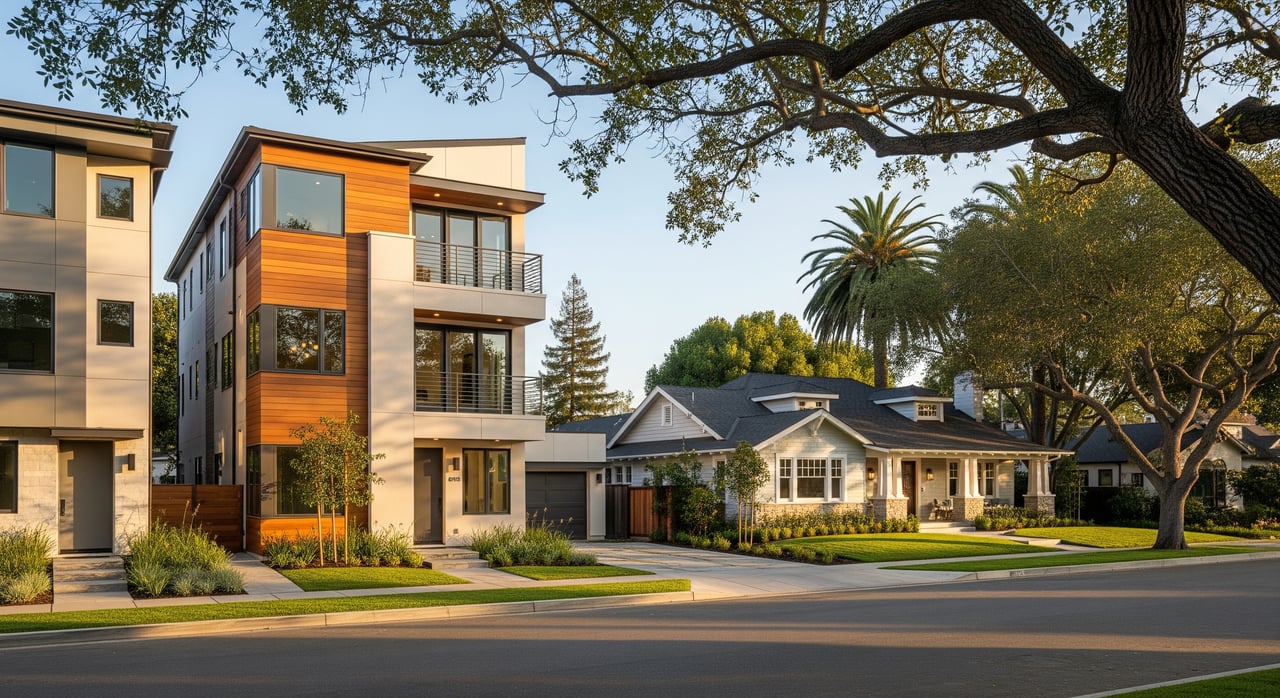
Trying to choose between a townhome and a single‑family house in Santa Clara? With commute times, HOA dues, maintenance, and resale value on your mind, it can feel like a lot to balance. You want the right space without surprises in your monthly budget or long‑term costs. In this guide, you’ll compare the total cost of ownership, understand HOA realities, weigh lifestyle tradeoffs, and use a practical checklist to make your decision with confidence. Let’s dive in.
Santa Clara housing at a glance
Santa Clara sits in the heart of Silicon Valley with a mix of older single‑family neighborhoods and newer infill townhome and condominium communities. Strong demand from major employers, Levi’s Stadium activity, and nearby tech corridors shapes how and where people choose to live.
Transit and roads are robust, with VTA light rail and buses, Caltrain access in or near the city, and major highways like US‑101, CA‑237, and I‑280 nearby. Location can make a real difference in commute time and daily convenience.
Land is scarce in the Silicon Valley core, which tends to push single‑family home prices higher relative to townhomes. Some buyers also factor in specific school attendance areas and nearby amenities, which can limit options in certain neighborhoods.
Cost of ownership: apples‑to‑apples
Understanding total cost of ownership helps you compare a Santa Clara townhome and a house on equal footing. Look beyond the list price and consider what you pay to own and operate the property each year.
Purchase price and closing
Single‑family homes generally sell at a premium over townhomes because you own private land and a yard. Closing costs for both include lender, escrow, and title fees. Townhomes and condos may add HOA‑related documentation fees.
Financing factors for HOAs
Lenders review HOA financials, owner‑occupancy ratios, and any pending litigation for condos and many townhomes. Some FHA or VA loans require that a complex meet specific approval criteria, which can influence your mortgage options. Interest rates and mortgage insurance are usually similar for comparable borrower profiles, though some lenders price condo loans a bit differently.
Taxes and special assessments
Santa Clara County property taxes follow California’s Proposition 13 structure with an effective base rate plus any voter‑approved parcel taxes or Mello‑Roos where applicable. Both property types follow the same system, though single‑family assessments are often higher because the purchase price is higher. Always check the specific parcel for any additional taxes.
HOA dues and reserves
Townhomes and condos typically have monthly HOA dues that may cover exterior maintenance, roof, landscaping, master insurance, common utilities, trash, and amenities. Dues vary based on age, amenities, and what is included. Review the reserve study, budgets, and meeting minutes to understand whether the HOA is well funded or at risk of special assessments. A strong reserve can reduce your risk; a weak reserve may shift costs to you later.
Insurance basics
Single‑family owners carry a standard homeowner’s policy that covers the dwelling and property. Townhome and condo owners usually hold an HO‑6 policy for interior finishes, personal property, and loss assessment, while the HOA carries a master policy for common elements and sometimes the building shell. Obtain insurance quotes for both options so you can compare real numbers.
Maintenance and utilities
Single‑family owners should plan for more direct maintenance, including roof, exterior paint, yard, and systems. A general planning rule many owners use is setting aside 1 to 3 percent of the home’s value annually for maintenance and repairs. Townhome owners may have lower direct exterior costs because HOAs handle common elements, but you should still budget for interior upkeep and possible special assessments. Utilities often run higher for single‑family homes due to larger space and landscaping needs.
Build your TCO worksheet
Create a simple worksheet to compare options on equal terms:
- Annual mortgage payments (principal and interest)
- Annual property taxes including parcel taxes and any Mello‑Roos
- Annual insurance premiums (homeowner or HO‑6)
- Annual HOA dues multiplied by 12, if applicable
- Annual maintenance reserve based on property type and age
- Annual utilities and services
- Special assessment contingency for HOA properties
Plug in numbers from lender quotes, insurer quotes, HOA documents, and the specific property details so your decision is based on facts.
Ownership and HOA reality check
Condo vs townhome vs PUD
In Santa Clara, a townhome can be structured as a condominium or as a planned unit development, known as a PUD. The legal form affects what you own and what you maintain. In condos, you typically own the interior space and share ownership of common elements. In PUDs, you often own the land under your unit and may be responsible for more exterior items. The legal form also influences financing, insurance coverage, and maintenance responsibilities.
What to review in HOA documents
Before you commit, review:
- Bylaws, CC&Rs, and use restrictions, including rental and pet rules
- Current budget and reserve study, including percent funded and major upcoming repairs
- Any recent special assessments or pending litigation
- Minutes from recent board and owner meetings for insights into ongoing issues
- Insurance master policy to confirm what the HOA covers vs the owner’s HO‑6
- Ownership concentration and owner‑occupancy ratio, which some lenders require
Maintenance control vs convenience
Single‑family ownership gives you control over timing, quality, and scope of repairs, along with flexibility to modify your exterior and landscape. The tradeoff is handling unpredictable big‑ticket items like roofs or HVAC. HOA living can reduce your hands‑on maintenance but introduces shared decision‑making and the risk of deferred maintenance that leads to special assessments.
Resale and liquidity
Single‑family homes often draw a wider buyer pool and can command higher absolute prices, especially where land scarcity is a key driver. Townhomes attract first‑time buyers, downsizers, and those seeking low‑maintenance living close to amenities. Marketability for some complexes can be affected by rental restrictions, high dues, or lender ineligibility, so factor those into your exit strategy.
Lifestyle tradeoffs in Santa Clara
Space and outdoor use
Single‑family homes usually provide larger indoor footprints, flexible rooms, and private yards for gardening, pets, or play. Townhomes can offer efficient multi‑level layouts and newer finishes, with outdoor space that is often a patio or small yard plus shared open areas.
Privacy, noise, and parking
Shared walls in townhomes may introduce noise considerations, so check construction quality and sound insulation. Parking is often an attached garage with limited guest spaces. Single‑family homes typically provide more separation and private driveways or garages, though some older neighborhoods have narrower lots and street parking considerations.
Commute and transit
If you prioritize a short commute to nearby tech corridors or prefer transit access, townhomes near business centers or transit nodes can save time and costs. Single‑family homes in quieter residential pockets may extend your commute but offer a different lifestyle.
Schools and amenities
If schools are part of your decision, confirm attendance areas for each specific property. Also consider proximity to parks, recreation centers, shopping, and medical services to match your daily routine.
Stadium, airports, and future development
Levi’s Stadium, the Convention Center, and business parks can influence event traffic and noise in certain areas. Planned development and transportation projects can affect future desirability and commuting, so it helps to review city planning information for neighborhoods you are considering.
Decision checklist
Use this list when touring properties or reviewing disclosures:
- Budget and cash flow
- What is your maximum purchase price and monthly housing budget?
- How do HOA dues compare with a larger mortgage for a single‑family home?
- Financing and loan eligibility
- Will your lender approve the condo or townhome based on HOA documents, owner‑occupancy, and litigation status?
- Are there FHA, VA, or first‑time buyer program constraints?
- Maintenance and risk
- What does the HOA cover, and what is your responsibility? Confirm in CC&Rs and the master policy.
- What is the reserve fund level, and have there been special assessments?
- What is the age and condition of roof, HVAC, plumbing, and major systems, and who pays for replacements?
- Lifestyle and space
- Do you need a yard, garage, or flexible rooms for office or play?
- How important are privacy and noise considerations?
- Location and commute
- What is your commute to work and key destinations?
- Do you need transit access or prioritize car parking?
- Schools and neighborhood
- Is the home in your desired attendance area?
- Are parks, groceries, and services within your preferred range?
- Resale and exit strategy
- Who is your likely future buyer, and will HOA rules or dues affect marketability?
Which is right for you? Scenarios
Young professional commuter
- Recommendation: A townhome or condo near transit or your employer.
- Why it fits: Lower entry price than many single‑family homes, shorter commute, and reduced exterior maintenance.
- Caveats: Confirm HOA finances and lender eligibility. Make sure parking and home office space meet your needs.
Growing family seeking space
- Recommendation: A single‑family home in neighborhoods that meet your space and school goals.
- Why it fits: Private outdoor space and flexible rooms for long‑term living.
- Caveats: Expect a higher purchase price and more maintenance. Consider commute tradeoffs.
Downsizer minimizing chores
- Recommendation: A townhome or condo in a well‑managed HOA close to services.
- Why it fits: Lower maintenance, potential for one‑level or elevator access, and strong convenience.
- Caveats: Review reserve funding and pet or use rules. Consider rental flexibility if future relocation is possible.
Appreciation‑focused buyer
- Recommendation: A single‑family home when budget allows in your target neighborhood.
- Why it fits: Land ownership, flexibility to improve the property, and broad buyer appeal.
- Caveats: Higher upfront cost and ongoing upgrade and maintenance responsibilities.
Due diligence next steps
Gather documents and data so your decision is grounded in facts:
- MLS printout and comparable sales
- Seller disclosures and available inspection reports
- HOA packet: current budget, most recent reserve study, CC&Rs, master insurance, meeting minutes, and any litigation disclosures
- Pest or termite inspection and sewer lateral evaluation for older homes
- Insurance quotes for homeowner or HO‑6, and review of the HOA master policy
- Lender pre‑approval and any condo or HOA underwriting checklist
- School boundary confirmation and a personal review of neighborhood traffic and parking
- Title report and property tax history, including parcel taxes and any Mello‑Roos
Ready to compare your options?
If you want a clear, side‑by‑side analysis of specific Santa Clara homes and townhomes, we can help you run the numbers, review HOA health, and weigh commute and lifestyle factors. Start your plan with Jane Dew Real Estate and schedule a personalized consultation.
FAQs
How should I compare monthly costs for a townhome vs a house in Santa Clara?
- Build a total cost worksheet that includes mortgage, property taxes, insurance, HOA dues, maintenance, utilities, and a contingency for special assessments.
Do HOAs in Santa Clara cover roof and exterior maintenance for townhomes?
- Many do, but coverage varies by legal structure and CC&Rs; confirm exact responsibilities in the HOA’s documents and master insurance policy.
Will a condo or townhome be harder to finance than a house?
- Financing can be similar, but lenders review HOA financials, owner‑occupancy, and litigation; some programs require complex approval that can affect eligibility.
Are single‑family homes always more expensive than townhomes in Santa Clara?
- They generally sell at a premium due to land ownership and yards, but the exact gap varies by neighborhood and market cycle.
What maintenance costs should I expect for a single‑family home?
- Many owners plan 1 to 3 percent of home value per year for maintenance and repairs, with larger items like roofs or HVAC occurring periodically.
How do schools factor into choosing a Santa Clara neighborhood?
- If schools are a priority, confirm attendance boundaries for each property and weigh that alongside commute, space, and budget when comparing options.