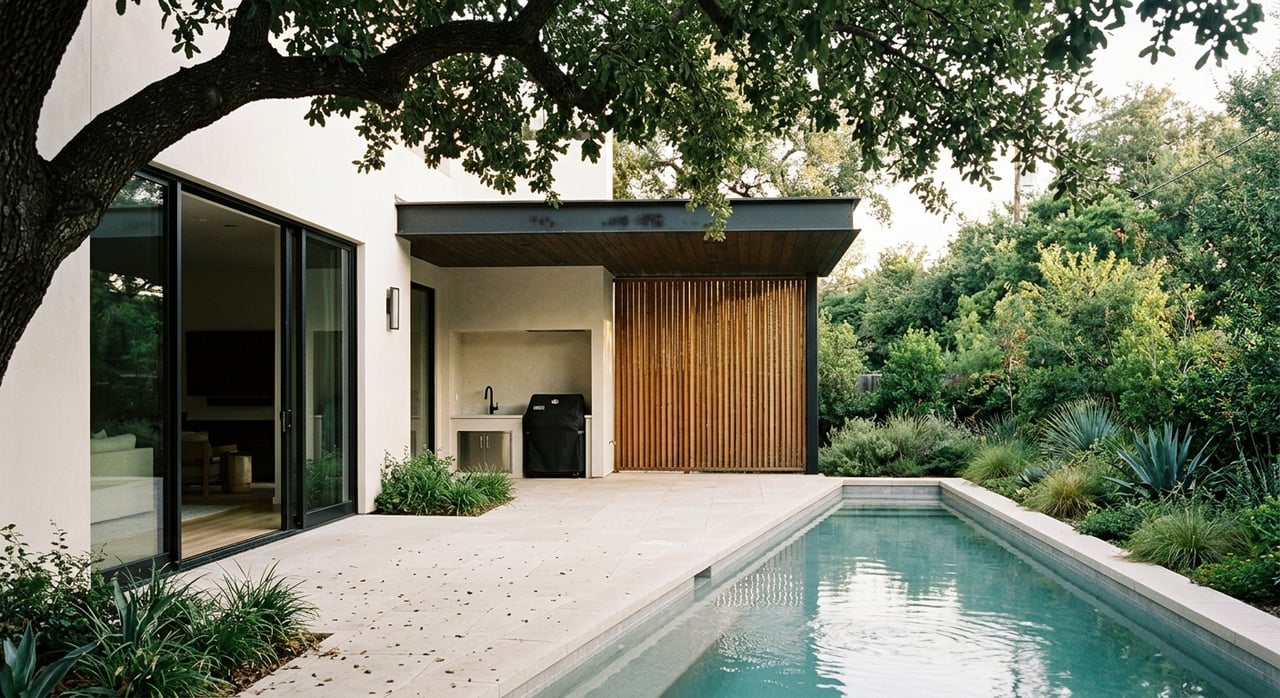
If you picture Los Altos Hills as just a bigger-home version of nearby Silicon Valley communities, you may miss what really defines it. Here, estate-style living is less about a specific home design and more about land, privacy, and a semi-rural setting that the town has intentionally protected for decades. If you are considering a move here, understanding how the lifestyle works day to day can help you buy with more confidence. Let’s dive in.
Estate-Style Living Starts With the Land
In Los Altos Hills, the estate feel comes from the town’s land-use pattern. The town was incorporated in 1956 to preserve the rural atmosphere of the foothills, and that goal still shapes how the community looks and functions today.
A big part of that character comes from minimum one-acre lots and low-density single-family development. The town’s general plan says there are no commercial or industrial uses within town limits, which helps explain why the area feels quieter and more private than many surrounding communities.
This is also a market where the parcel often matters as much as the house itself. Buyers tend to focus closely on privacy, view corridors, lot shape, and the quality of the existing improvements because Los Altos Hills is largely built out and not defined by waves of new large-lot subdivisions.
Housing Stock in Los Altos Hills
The housing mix strongly reflects that low-density plan. In the 2020 count cited by the town, 98.2% of housing units were single-family detached homes, while only 0.5% were multifamily.
That means if you are shopping here, you are usually looking at an existing-home market with a very specific ownership profile. You are not just buying square footage. You are often buying space around the home, separation from neighbors, and flexibility in how the property may function over time.
The town’s housing documents also note that lots of one acre or more can potentially accommodate a secondary unit. For some buyers, that can support guest space, multigenerational living, or future flexibility, depending on the property and local requirements.
What the Daily Lifestyle Feels Like
Los Altos Hills is a strong fit if you value privacy, outdoor space, and a quieter residential environment. It is less about being close to stores within town limits and more about enjoying a setting shaped by hills, open land, and larger residential parcels.
That distinction matters because the town intentionally does not include commercial uses. Many daily conveniences are found in nearby communities, so the lifestyle tradeoff is usually straightforward: more land and privacy in exchange for a more rural day-to-day feel.
For many buyers, that tradeoff is exactly the appeal. If you want room for gardens, a pool, guest accommodations, or simply more breathing room, Los Altos Hills offers a residential pattern that supports those priorities.
Open Space Shapes the Experience
Open space is not just a backdrop here. It is part of the town’s identity and one reason estate-style living feels so different in Los Altos Hills.
Town amenities include Byrne Preserve, Bicentennial Park, Juan Prado Mesa Preserve, and Westwind Barn. Residents also have nearby access to Mid-Peninsula Regional Open Space District lands and Rancho San Antonio County Park, which adds to the outdoor-oriented feel of the area.
One important detail is that much of what is considered open space in Los Altos Hills is privately owned and maintained. In other words, the scenic character of the town depends not only on public preserves and trails, but also on private property stewardship.
The Pathway System Is a Major Lifestyle Feature
One of the most distinctive amenities in Los Altos Hills is the pathway system. The town describes it as a safe, convenient non-vehicular network that connects neighborhoods and links to surrounding open space.
These paths are used by walkers, runners, bicyclists, and horseback riders. Many off-road stretches also give you a direct sense of the rural character that the town has worked to preserve.
For buyers, this adds another layer to how a property lives beyond its lot lines. The setting is not only private, but also connected in a way that supports an outdoor routine.
Equestrian Amenities Add to the Character
For buyers interested in horse-friendly surroundings, Los Altos Hills stands out. The town says Westwind Barn is used for horse boarding, riding programs, and community events, and it also operates a public riding ring with local horsemen’s groups.
That does not mean every property is set up for equestrian use, but it does show how deeply that rural-residential identity runs. In Los Altos Hills, acreage living and horse-related amenities are part of the broader character of the town.
Ownership Comes With More Stewardship
Large-lot living usually means more property oversight, and that is especially true here. In Los Altos Hills, the scenic setting comes with practical ownership responsibilities that buyers should understand early.
The town’s documents point to regular attention around path clearing, drainage management, wildfire preparation, and infrastructure upkeep. This is one of the clearest differences between estate-style ownership and a more typical suburban neighborhood.
If you love the idea of space and privacy, it is worth asking yourself whether you also want the maintenance that often comes with it. For many buyers, the answer is yes, but it should be a clear-eyed decision.
Septic, Sewer, and Water Matter
Utility setup can vary from property to property. The town’s housing element states that about half of Los Altos Hills uses septic systems and the other half is connected to public sewer.
That distinction matters because it can affect maintenance, inspections, and long-term planning. The town also notes on its sanitary sewer page that property owners are responsible for maintenance, repair, and replacement of the sewer lateral from the building to the main connection.
Water service also varies by location. Purissima Hills Water District serves roughly two-thirds of Los Altos Hills, while the remaining area is served by California Water Service.
Landscaping Can Be a Real Cost Factor
On a large property, landscaping is not just a design feature. It is often a major part of ownership cost and maintenance.
The town’s housing element notes that more than 80% of the water used annually in the district goes to landscape irrigation. On an estate-style parcel, a large yard can translate into meaningful ongoing water use, irrigation management, and landscape care.
Some residents also supplement water with wells. That is another reason buyers should evaluate each property individually rather than assume all homes in town function the same way.
Hillside Conditions Affect Planning
Terrain is another important piece of the ownership picture. The town’s housing element says Los Altos Hills has generally sloping terrain with unstable and-or expansive soils, which can affect how properties are improved and maintained.
For major projects, the town’s planning conditions show that approval may involve a landscape plan, a landscape maintenance deposit, open-space easements over oak trees or steep slopes, pathway-related fees or easements, fire sprinklers or hydrants, utility undergrounding, and repair of any construction damage to roads, driveways, or pathways.
That does not mean every project becomes difficult. It does mean renovations and additions often require more coordination than buyers might expect in a flatter, more conventional suburban setting.
Private Roads Are a Key Due-Diligence Item
Privacy can sometimes come with shared road obligations. The town publishes a list of public and private streets and also provides sample private-road maintenance agreements.
That matters because the sample agreement states that the town has no obligation to maintain or improve the private roadway property. If a home is on a private road, buyers should review maintenance responsibilities carefully before closing.
This is one of the most practical examples of how estate-style living works in real life. A private approach may feel exclusive and secluded, but it can also bring shared upkeep expectations.
Wildfire Readiness Is Part of Ownership
Wildfire preparation is central in Los Altos Hills. The town says wildfire is one of the primary threats to the community, and it notes that most roads are two lanes and not very wide.
Residents are encouraged to register with both Nixle and AlertSCC for emergency updates. The town and fire district also offer brush chipping, yard-waste drop-off events, and fuel-evaluation site visits, which signals how important defensible space and vegetation management are here.
For buyers, this is not a small side issue. It is part of the ongoing ownership model in a hillside, low-density environment.
Permitting Is Often More Structured
If you plan to renovate, expand, or significantly update a home, expect a more structured process than you might find in a typical tract neighborhood. The town says all building permits must be submitted electronically, and project approval can involve landscaping, drainage, path, sewer, and fire-related conditions.
That is another reason local guidance can be especially valuable when evaluating a property. A home may look ideal on paper, but the site itself often determines how simple or complex future improvements may be.
Who This Lifestyle Fits Best
Estate-style living in Los Altos Hills tends to fit buyers who place a high value on privacy, acreage, views, and outdoor use. It can be an excellent match if you want a quieter residential setting and are comfortable budgeting for irrigation, tree care, road access, and periodic property upgrades.
It is usually a less natural fit if you want dense neighborhood services within town limits or a more low-maintenance ownership experience. The better question is not whether Los Altos Hills is desirable in general. It is whether the balance of land, privacy, and stewardship matches how you actually want to live.
Questions To Ask Before You Buy
When you evaluate a specific home in Los Altos Hills, a few practical questions can shape both your lifestyle and your long-term costs.
Start with these:
- Is the property on septic or sewer?
- Which water district serves the home?
- Is the road public or private?
- How steep is the site?
- What drainage, vegetation, or defensible-space work may be needed?
- Are there pathway, easement, or maintenance obligations tied to the parcel?
These details may not be as flashy as square footage or finishes, but they often tell you much more about what day-to-day ownership will really feel like.
If you are weighing whether Los Altos Hills is the right fit, the best approach is to look beyond the idea of an estate home and focus on how the land, systems, and setting work together. That is where the value of this market really shows up, and it is also where smart due diligence can make all the difference. If you want a clear, locally informed perspective on buying or selling in Los Altos Hills and nearby Silicon Valley communities, Jane Dew Real Estate is here to help.
FAQs
What does estate-style living in Los Altos Hills usually mean?
- In Los Altos Hills, estate-style living usually refers more to large parcels, privacy, and a semi-rural residential setting than to one specific architectural style.
What kind of homes are most common in Los Altos Hills?
- The housing stock is overwhelmingly single-family detached, with the town citing 98.2% of units in that category in the 2020 count.
What should buyers check about utilities in Los Altos Hills?
- Buyers should confirm whether a property uses septic or sewer, which water district serves it, and whether there are any maintenance responsibilities tied to those systems.
What makes ownership in Los Altos Hills different from a typical suburb?
- Ownership often involves more stewardship, including landscape upkeep, irrigation management, drainage attention, wildfire preparation, and sometimes private-road coordination.
What outdoor features make Los Altos Hills distinctive?
- The town is known for its pathway system, preserved open-space character, nearby access to regional open space, and horse-friendly amenities such as Westwind Barn and the public riding ring.
What should buyers ask about road access in Los Altos Hills?
- Buyers should find out whether the property is on a public or private road and review any maintenance agreements or shared obligations that may apply.