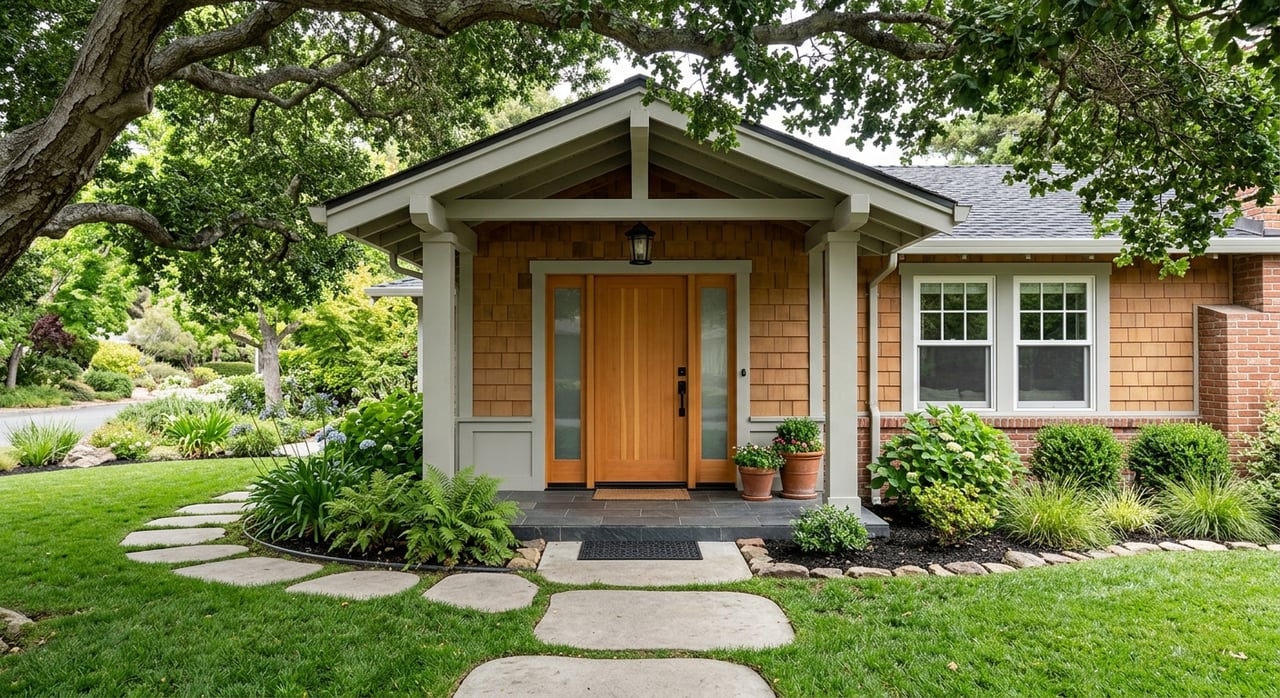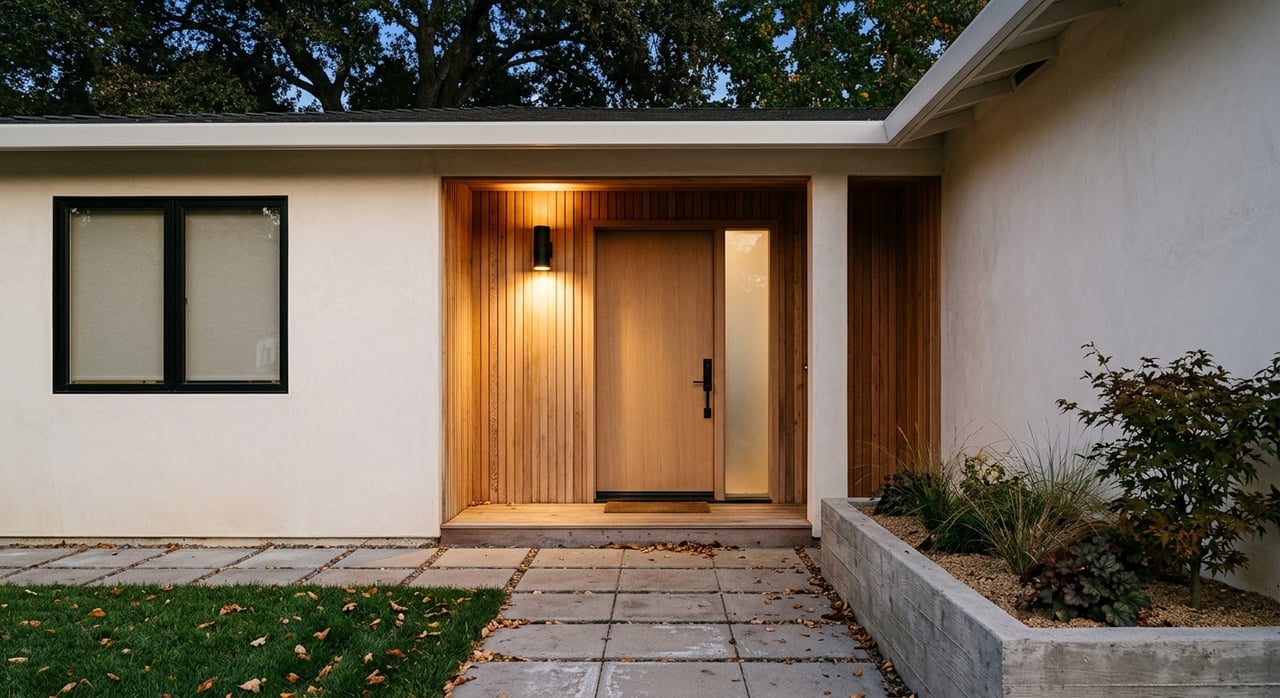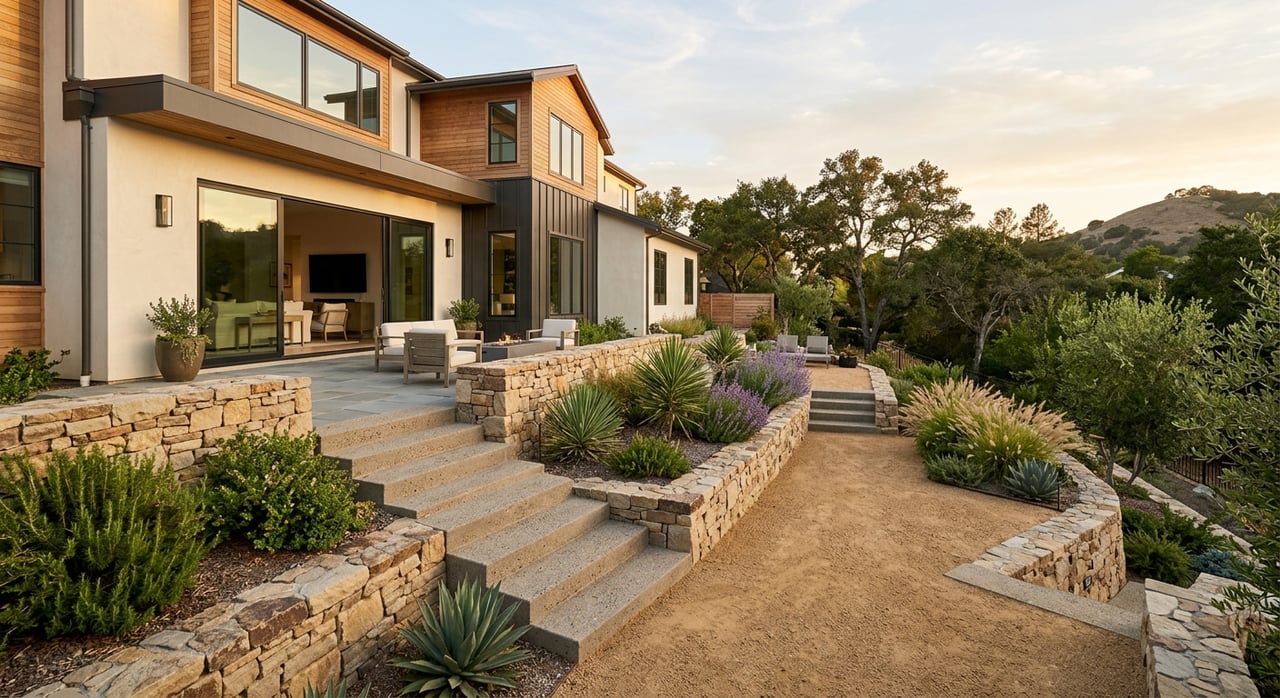
Wondering why two Los Altos Hills properties with similar acreage can have very different remodel potential? In this market, land value is often less about the number on paper and more about what the site can actually support. If you are buying, holding, or planning to improve a home here, understanding the rules behind buildability can help you avoid costly surprises and spot real long-term upside. Let’s dive in.
Why land value works differently here
Los Altos Hills is a small, largely residential town of about 9 square miles with a rural-residential character, limited commercial activity, and an extensive pathway system. That setting is part of the appeal, but it also means land use is shaped by town policies that protect open space, privacy, and site conditions.
For you as a buyer or homeowner, that changes how you should evaluate a property. A large lot may still have a limited building envelope if it is steep, irregularly shaped, or affected by easements, creek areas, or tree protections.
Acreage is not the whole story
The town requires at least one net acre for new lots, along with a 160-foot-diameter circle within the net area. Older nonconforming parcels created before January 1, 1980 can fall under different review standards depending on their lot unit factor.
That means two homes with similar lot size may not offer the same expansion options. In Los Altos Hills, buildability depends on the lot’s legal and physical limits, not just the gross acreage shown in a listing.
How buildable area is calculated
The Town’s general plan gives a useful benchmark for a typical one-acre flat lot. It describes about 15,000 square feet of maximum development area and about 6,000 square feet of maximum floor area.
That does not mean every one-acre parcel can support that exact size. It means that once slope, setbacks, easements, and other constraints are applied, the practical buildable area may be much smaller than you expect.
Slope can change everything
Flatter lots usually offer more flexibility
Los Altos Hills ties maximum development area and floor area to average slope and lot unit factor. On lots with 10 percent slope or less, development area is calculated as lot unit factor times 15,000 square feet, while floor area is calculated as lot unit factor times 6,000 square feet.
As slope increases, those formulas become more restrictive. At 30 percent slope or more, the floor-area formula drops to lot unit factor times 5,000 square feet.
Steep sites can cost more to improve
The town’s grading policy says grading, excavation, and fill should be the minimum necessary for a project. On sites with natural slopes over 14 percent, Type II foundations such as step-on-contour, daylight, or pole foundations are required.
For you, this is a major practical issue. A hillside lot may support a beautiful home, but the engineering and site work can have a significant impact on cost, timing, and design choices.
Setbacks and height matter early
Standard structural setbacks are generally 40 feet from the nearest street or access way on a single-frontage lot and 30 feet from property lines or other access lines in other situations. The standard height limit is 27 feet, though primary dwellings can reach 32 feet if required setbacks are increased, and overall building height may not exceed 35 feet.
Those are the baseline rules, not always the final answer. The town may impose stricter setbacks, lower height, or smaller floor area when lot shape, natural features, easements, erosion concerns, or visibility call for it.
Existing conditions can help remodel plans
For remodels and additions, some legal existing conditions can carry forward. If an existing legally constructed structure already has eaves extending beyond current setback requirements, an addition or remodel may be allowed to match that existing eave extension.
In constrained situations, the town may also allow eaves to extend up to four feet into a yard area. That kind of nuance can make a meaningful difference when you are planning around a tight envelope.
Easements, trees, and pathways reduce usable area
One of the biggest mistakes buyers make is assuming the whole lot is available for future construction. In Los Altos Hills, open-space easements may be required over oak tree coverage, slopes over 30 percent, and creek areas.
The general plan also says designated parcels may need trail or path easements or in-lieu fees when developed. In addition, local standards keep buildings away from recorded easements, creek buffers, and pathway areas.
Why this matters in real life
A parcel may look generous on a map, but the truly usable portion could be much smaller. If you are comparing homes for long-term remodel or expansion potential, you should focus on the remaining legal envelope, not just lot size.
Remodel costs are often site costs
A remodel in Los Altos Hills is not just an architectural project. Depending on scope and site conditions, standard conditions of approval for new residences and major additions can include:
- A landscape plan
- A landscape maintenance deposit
- Fire sprinklers or a hydrant
- Engineer certification of height and location
- Sewer connection if a sewer line is within 200 feet
- A grading and erosion-control plan
- Repair of construction damage to roads or pathways
Some projects may also trigger pathway-related fees. All building permits are submitted electronically through the town’s eTrakit portal, while smaller permits such as kitchen and bathroom remodels can be submitted by email.
Sewer and septic can shape your options
In Los Altos Hills, wastewater planning can be just as important as square footage planning. Santa Clara County requires a permit to construct, reconstruct, or repair onsite sewage systems, and these permits are issued only when a sanitary sewer is not available within 200 feet of the building.
Septic use can also be disallowed if soil conditions, topography, high groundwater, or other site issues make onsite disposal unsuitable. That means a remodel or addition may depend on infrastructure capacity, not just design goals.
Septic review is highly site-specific
County septic submittals must show slopes, wells, creeks, drainage features, easements, structures, driveways, and other site conditions. That is a strong reminder that land potential here often comes down to engineering details that are easy to miss at first glance.
ADUs add flexibility, but not everywhere
Los Altos Hills allows one ADU and one JADU on a lot with an existing or proposed single-family dwelling, as long as the lot has adequate water and sewer or septic service. Detached ADUs are generally limited to 850 square feet for a studio or one-bedroom unit and 1,000 square feet for larger units.
Attached ADUs are generally limited to 1,000 square feet or 50 percent of the primary dwelling’s living area, whichever is less, with at least 800 square feet allowed. JADUs are generally limited to 500 square feet.
Local constraints still apply
ADUs that meet stronger local siting standards can qualify for incentives up to 1,200 square feet and 19 feet in height. But even then, they remain subject to site constraints.
The town requires site development permits for ADU proposals in easements, slopes of 30 percent or more, creek buffers, geotechnical or seismic hazard zones, and heritage oak critical root zones. So while ADUs can create useful flexibility, they are not a simple fit for every lot.
SB 9 has limits in Los Altos Hills
Los Altos Hills has detailed local standards for SB 9 development. New SB 9 units generally max out at 900 square feet and 16 feet tall unless specific incentive thresholds are met.
The minimum front setback is 40 feet, and side and rear setbacks are 4 feet for the unit itself. Patios, decks, and other hardscape may still need to meet the standard 40-foot front and 30-foot side and rear setbacks.
Site restrictions still control feasibility
SB 9 units cannot be placed in recorded easements, within 25 feet of a creek bank, within 10 feet of a designated pathway line, or on slopes greater than 30 percent. They also must meet local parking, sewer or onsite wastewater treatment, and other standards.
If you are evaluating a property for future flexibility, this is an important point. State law may open doors, but local site conditions still decide how wide those doors really are.
Wildfire standards can affect design and cost
Los Altos Hills adopted Chapter R337 of the California Building Code for wildfire exposure and applies it town-wide to new construction, including primary homes, detached ADUs, accessory structures, and rebuilt structures. The town encourages additions and remodels to follow these standards as well, even when not required.
Key design factors include Class A roofing, ignition-resistant exterior walls, protected vents, noncombustible or ignition-resistant eaves and porch ceilings, and fire-resistant decks and appendages. These requirements and recommendations can influence material choices and overall project cost.
What buyers and owners should look at first
If you want to compare remodel potential between two Los Altos Hills properties, start with the questions that affect buildability most directly:
- How much of the legal building envelope is still unused?
- What is the average slope of the lot?
- Are there easements, creek areas, pathways, or oak tree constraints?
- How much of the floor-area allowance is already used by the current home?
- Will sewer, septic, grading, or wildfire standards add cost or limit scope?
- Does the site appear to need added review because of slope, visibility, or lot shape?
These questions can help you separate a lot that looks promising from one that truly offers long-term options.
Why early due diligence matters
In Los Altos Hills, projects that look easy on paper can become far more complex once site review begins. The town’s approval process makes it clear that the right professionals may need to be involved early, depending on the property.
That can include an architect, civil engineer, surveyor, geotechnical engineer, arborist, and septic consultant. For you, the key takeaway is simple: in this market, land value is often really about buildability.
If you are weighing a purchase, planning a future remodel, or deciding how to position a property for sale, local context matters. A thoughtful review of the site can help you make a more confident decision, and Jane Dew Real Estate is here to help you evaluate Los Altos Hills properties with a practical, market-savvy lens.
FAQs
What does land potential mean for a Los Altos Hills property?
- Land potential usually means how much of the lot can realistically support future construction, additions, or accessory units after accounting for slope, setbacks, easements, creek areas, and other site constraints.
How does slope affect remodel potential in Los Altos Hills?
- Slope affects both the allowed development area and the allowed floor area, and steeper sites may also require more specialized foundations, grading review, and higher improvement costs.
Can you add an ADU in Los Altos Hills?
- In many cases, yes, but the lot must have adequate water and sewer or septic service, and the ADU must still comply with local rules related to slopes, easements, creek buffers, hazard zones, and tree protection areas.
Why can two one-acre lots have different values in Los Altos Hills?
- Two one-acre lots can differ significantly in value because one may have a flatter, less restricted building envelope while the other may be limited by slope, setbacks, easements, pathways, trees, or wastewater constraints.
What should you review before buying for remodel potential in Los Altos Hills?
- You should review the remaining legal building envelope, existing floor-area use, average slope, setback limits, easements, creek or pathway constraints, and whether sewer, septic, grading, or wildfire standards could affect cost or feasibility.